




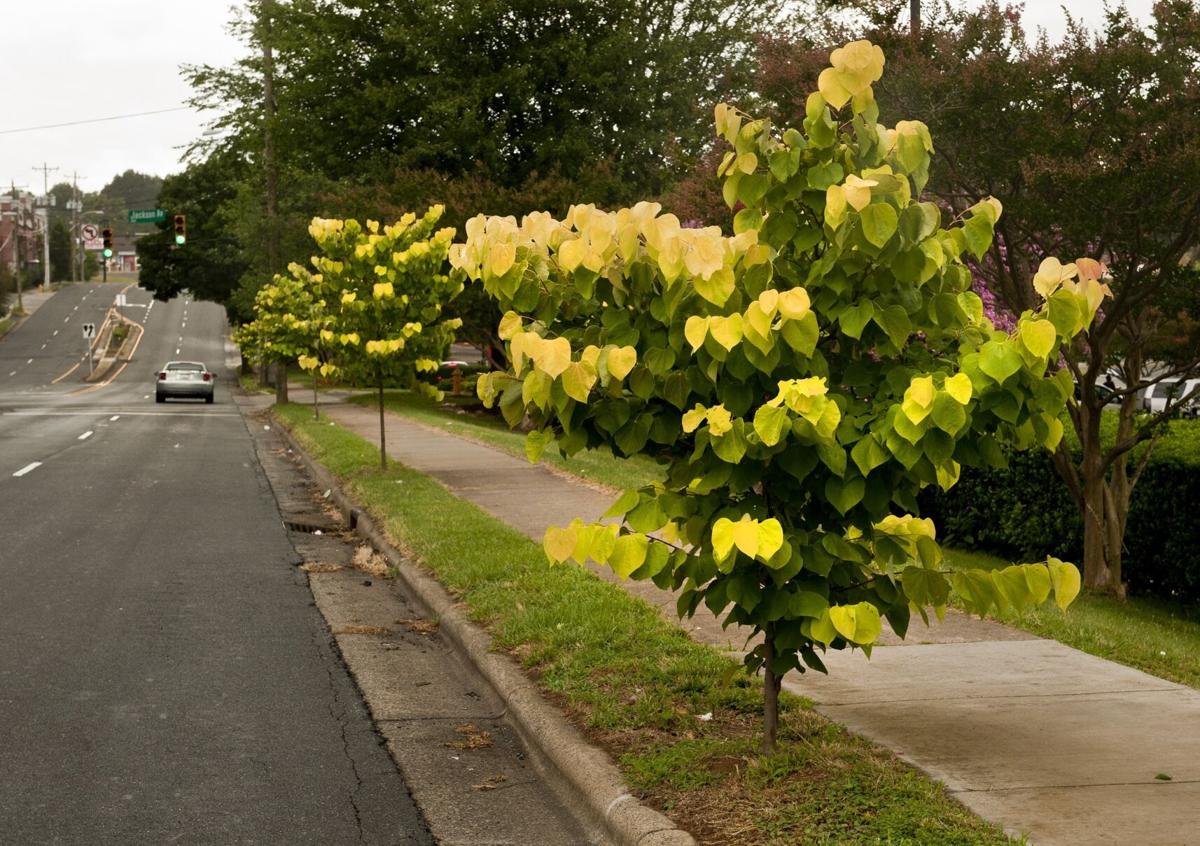
The city of Winston-Salem has planted Hearts of Gold Redbuds (Cercis canadensis ‘Hearts of Gold’) along New Walkertown Road near the intersection with Martin Luther King Jr. Blvd. The tree features heart-shaped leaves that turn from green to yellow in the summer.
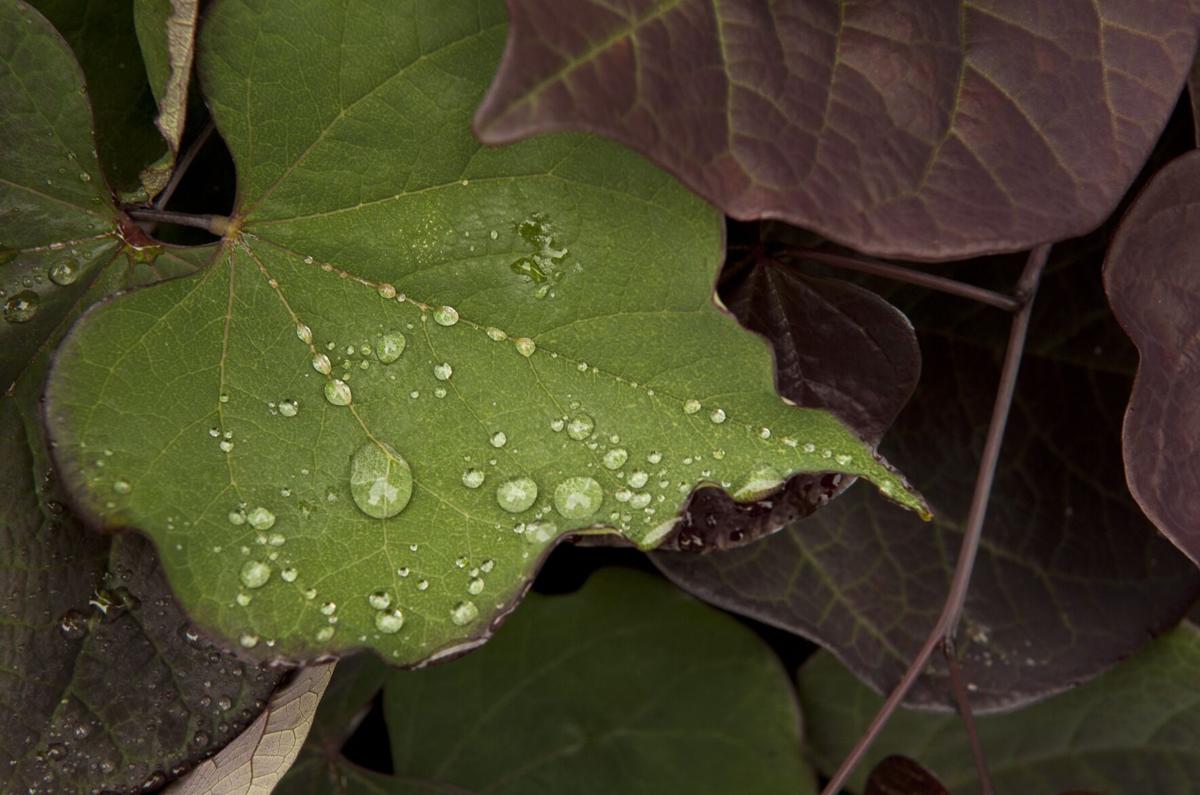
Rain collects on the leaves of a Ruby Falls Redbud (Cercis canadensis ‘Ruby Falls’), which is planted near the Reynolda Gymnasium at Wake Forest University. The tree features a weeping profile and purple heart-shaped leaves.
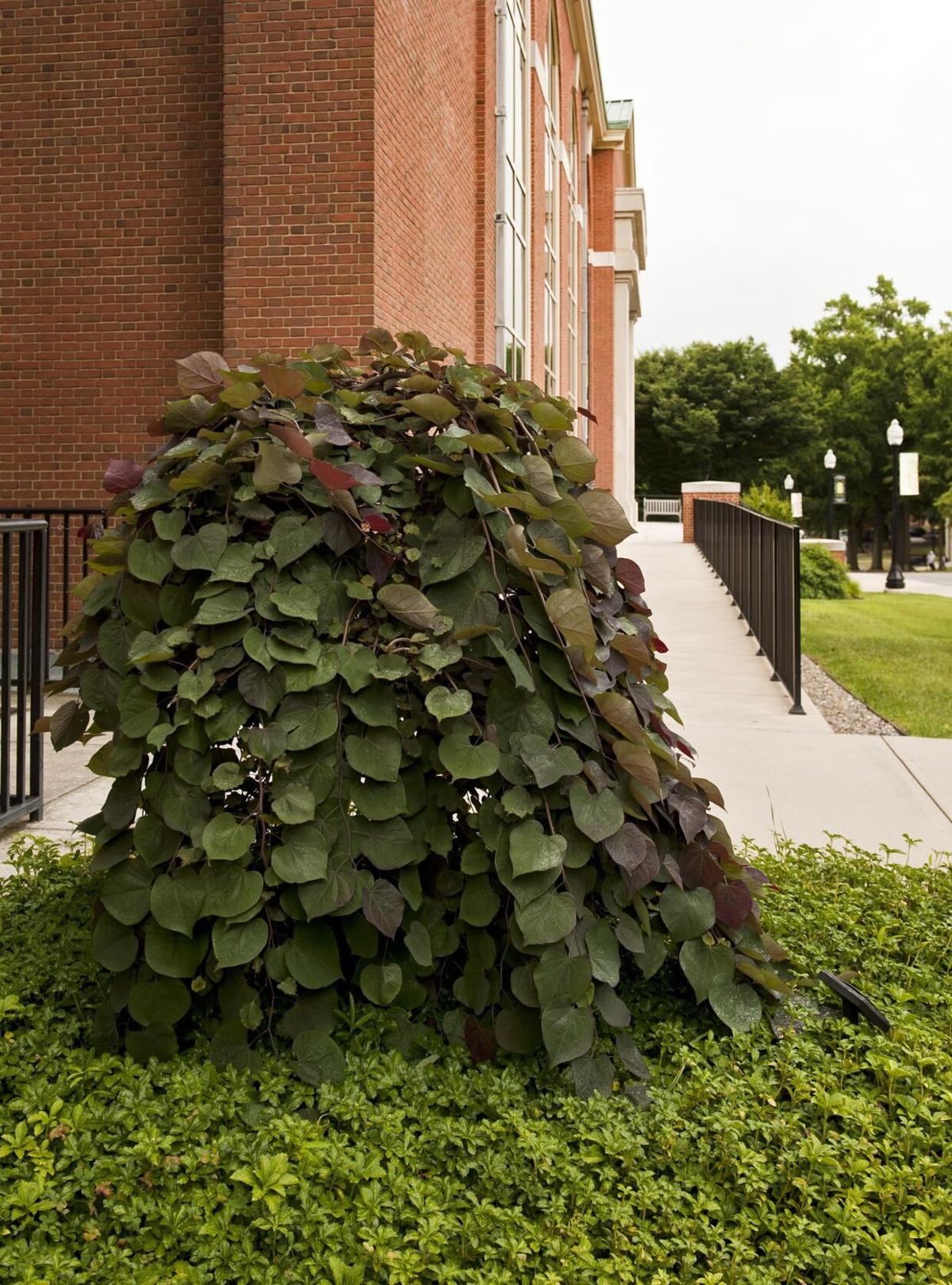
A Ruby Falls Redbud (Cercis canadensis ‘Ruby Falls’) is planted near the Sutton Center at Wake Forest University. The tree features a weeping profile and purple heart-shaped leaves.
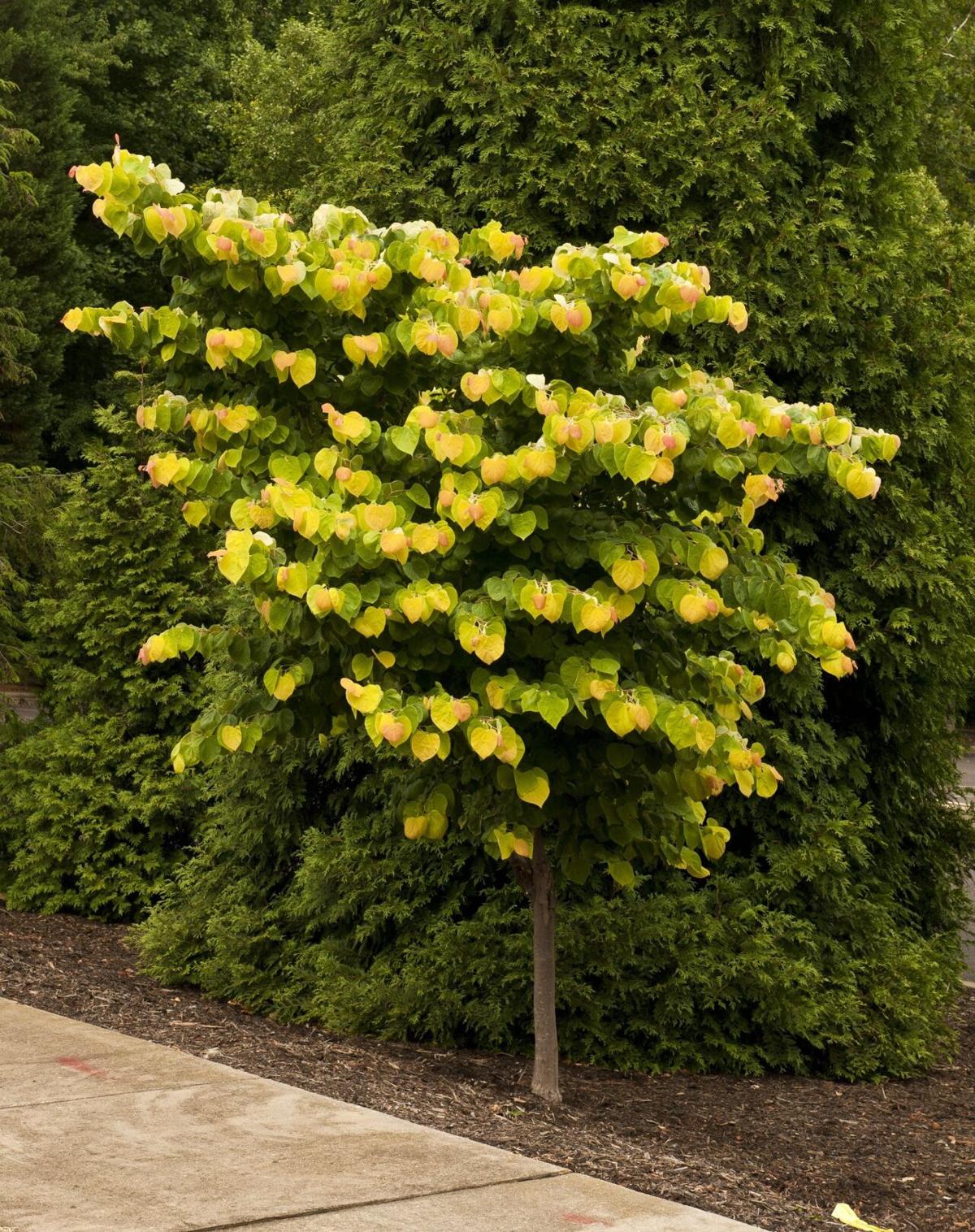
A Rising Sun Redbud (Cercis Canadensis ‘JN2’) is planted near the Reynolda Road entrance to Wake Forest University. The tree features heart-shaped leaves turn from green, to yellow and orange in summer.
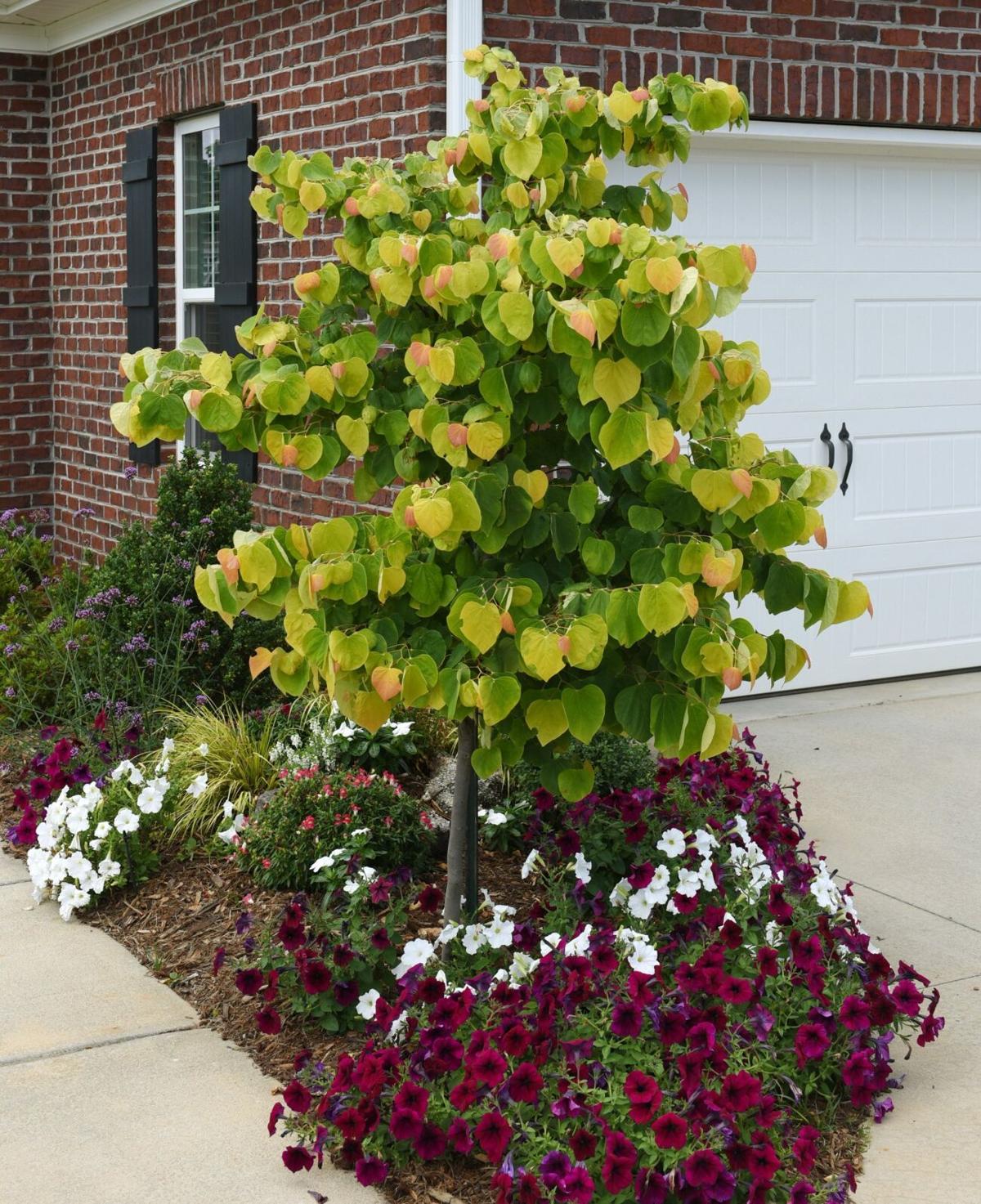
Petunias, Dianthus, snapdragons and Japanese sweet flag grass (Acorus) are planted under a Rising Sun redbud tree at Eva and Gordon Bingham’s Clemmons home.
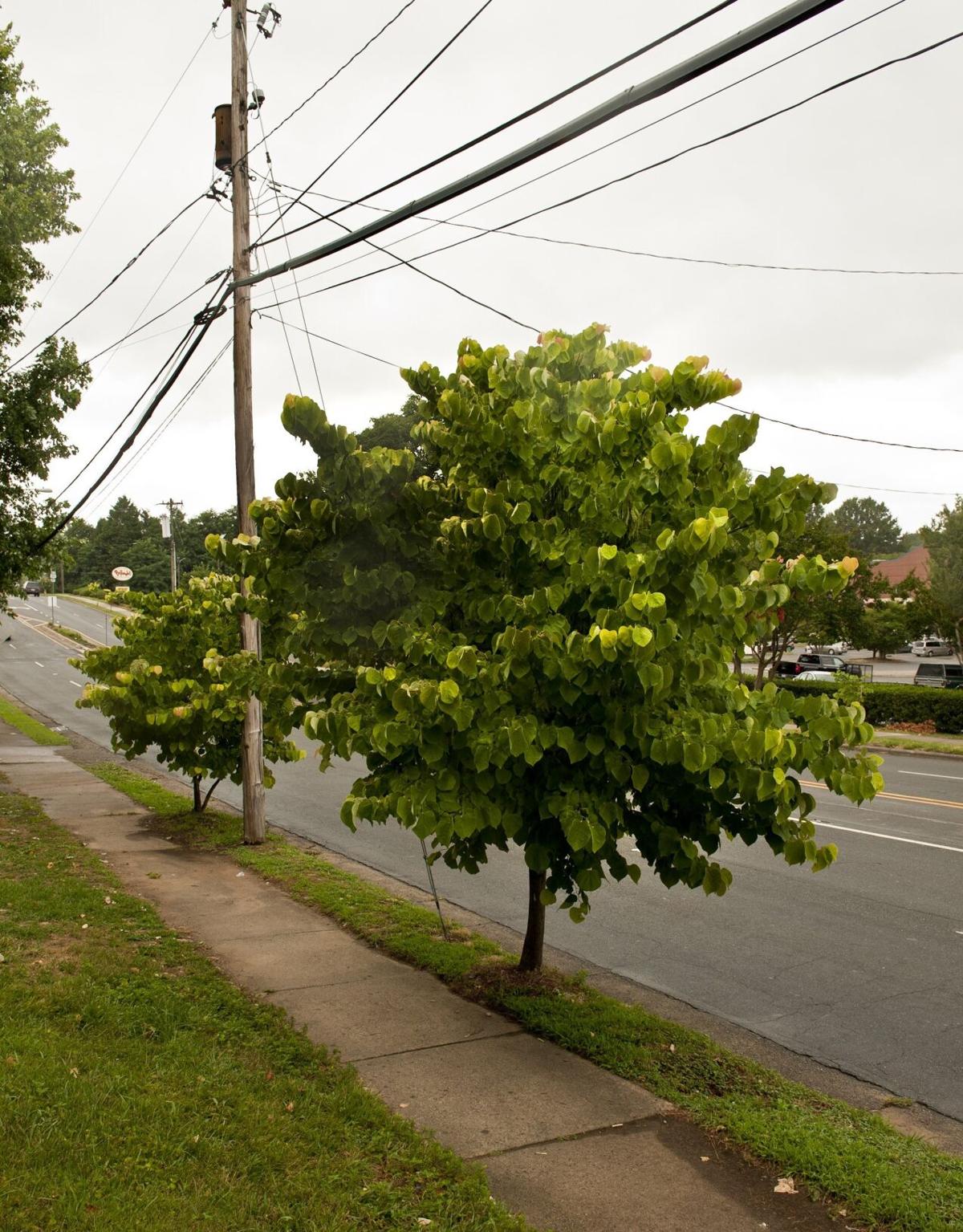
Hearts of Gold Redbuds sit along New Walkertown Road near the intersection with Martin Luther King Jr. Blvd.

The city of Winston-Salem has planted Hearts of Gold Redbuds and crepe myrtles along New Walkertown Road near the intersection with Martin Luther King Jr. Blvd.
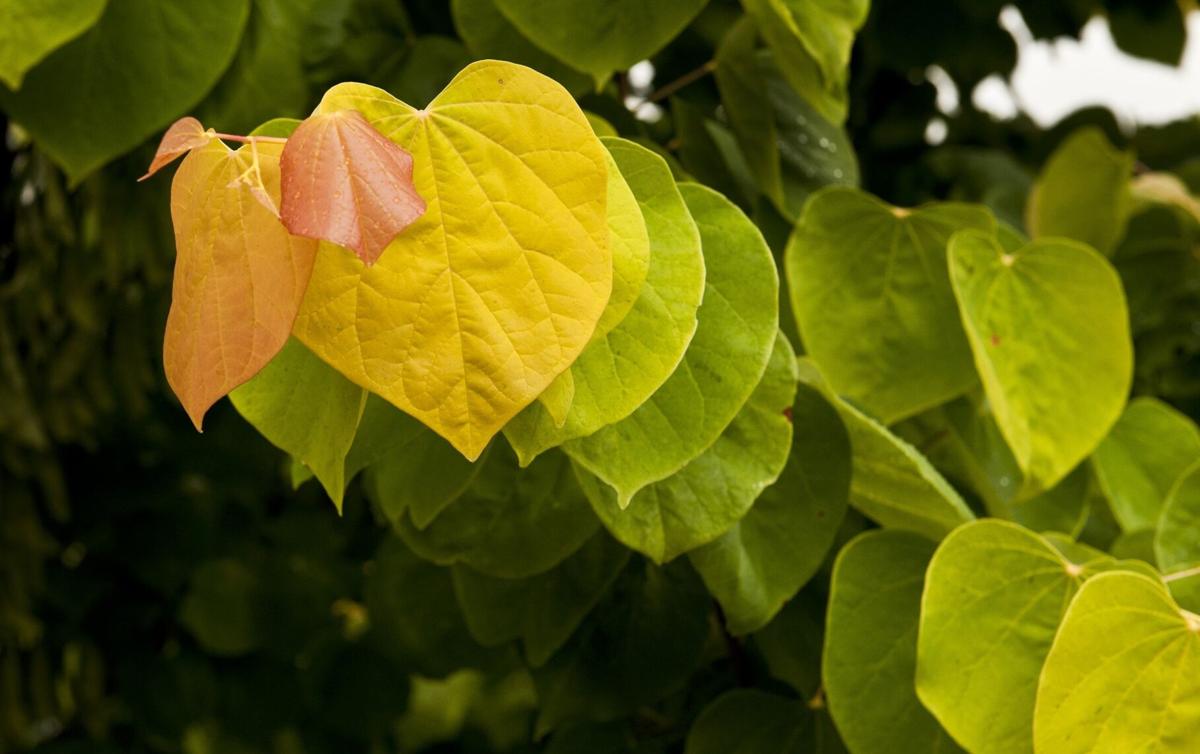
A Rising Sun Redbud (Cercis Canadensis ‘JN2’) is planted near the Reynolda Road entrance to Wake Forest University. The tree features heart-shaped leaves turn from green, to yellow and orange in summer.

A Ruby Falls Redbud (Cercis canadensis ‘Ruby Falls’) is planted near the Reynolda Gymnasium at Wake Forest University. The tree features a weeping profile and purple heart-shaped leaves.
One of the most prolific native trees in North Carolina, the Eastern redbud (Cercis canadensis) is a delightful harbinger of spring with its cheerful pink-purple blossoms. Small, heart-shaped leaves make the redbud stand out from other trees, and its multi-trunk habit makes it a graceful addition to our forest understory.
Eastern redbuds typically grow to around 25 feet tall and wide, preferring partial shade for optimal growth. Many areas of our home gardens— new homes, especially — may not allow for the space and exposure that native redbuds need to flourish.
Decidedly, the most favorable attribute of the Eastern redbud is its bloom period. Strings of bursting purple blossoms covering bare trunks and branches is a beautiful sight — albeit brief. The foliage that follows is nice, but nondescript and well, a little boring. So, although the native redbud can make for a great addition to our home gardens, it isn’t as versatile as some of its newer, more unique cousins.
What many newer redbud cultivars offer is diversity in foliage and varying leaf color. There are several cultivars of Cercis canadensis that I would recommend for home gardens for a variety of reasons, including dramatic foliage. Topping the list is ‘The Rising Sun,’ ‘Ruby Falls’ and ‘Hearts of Gold.’
‘The Rising Sun’ is perhaps the most dramatic of all redbuds, with a rainbow of color exuding from a small, stout tree. As with any redbud, ‘Rising Sun’ produces delightful blooms in early spring, but what follows is far more special than the straight species. New leaves emerge bright orange to apricot, maturing to shades of gold, yellow and lime green. As the season progresses from spring to fall, the colors only get more intense as the foliage gets thicker.
More Stories
Transform Your Home & Garden in a Weekend
Protect Your Home & Garden Year Round
Low-Maintenance Plants for Home & Garden